Our lab investigates how distributed brain circuits integrate, prioritise, and transform sensory information into behavioural responses. We combine high-resolution circuit mapping, large-scale neural recordings, and biologically inspired computational modelling to uncover the organisational principles that support this transformation across cortical and subcortical networks. By uniting experimental and theoretical approaches, our programme aims to establish a mechanistic account of sensory integration and sensorimotor transformations, from circuit motifs to behaviour. Ultimately, this integrated approach is essential for understanding executive function disorders characterised by distractibility, impulsivity, and cognitive inflexibility.
Our main research focus are:
Multisensory Integration

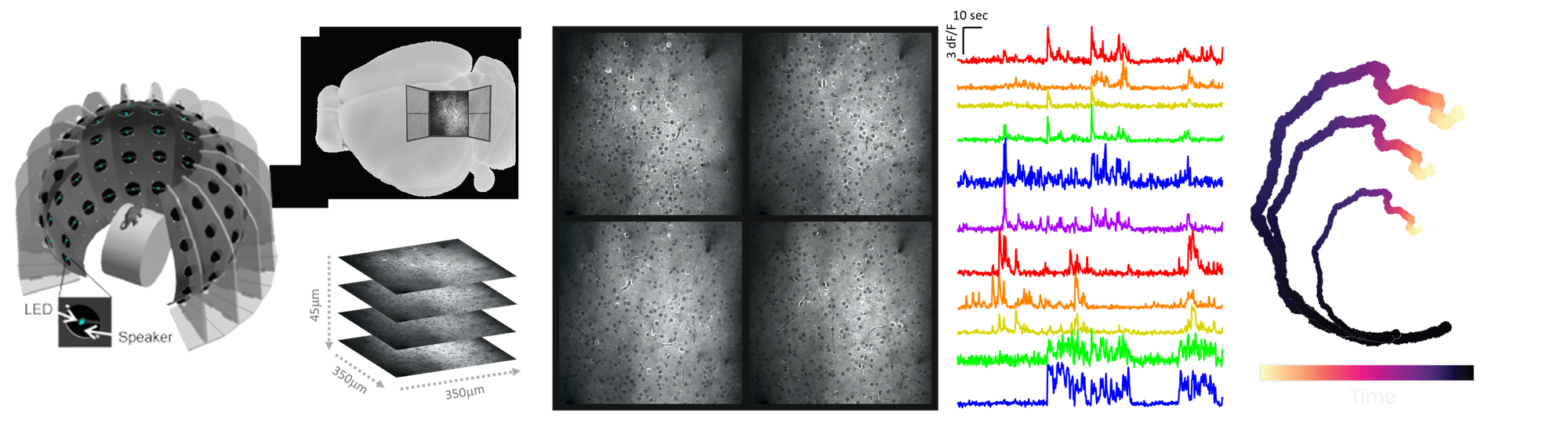
We are studying the network organisation that supports multisensory integration in cortical and subcortical circuits. Our work has revealed that crossmodal communication between sensory cortices is highly structured, following the organising principles of the target area and enabling spatially coherent integration of visual and auditory information. Extending this to subcortical circuits, we have shown that the superior colliculus implements specialised architectures for temporal and spatial integration. Ongoing work focuses on investigating plasticity of multisensory processing and neuromodulatory control of crossmodal integration. Understanding the organisation of cross-modal circuits in health may inform therapeutic strategies to compensate for impairments in individual sensory modalities, as well as the design of adaptive, biologically grounded AI systems.
Senses in Action
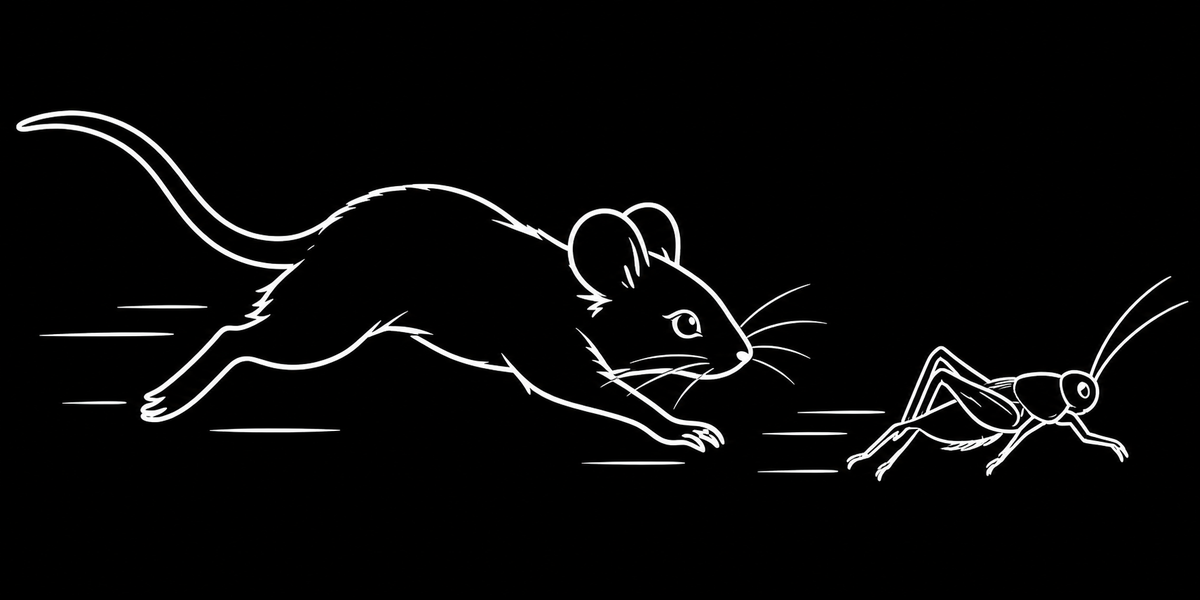
During continuous sensory-guided behaviours, such as playing football, chasing a mosquito, or driving a car, sensory information must be rapidly integrated in the context of ongoing motor actions to enable both predictive estimations and rapid corrections under unexpected deviations. To study how neuronal circuits support this dual demand, we developed a behavioural paradigm in which mice pursue moving targets presented on a screen. Current work focuses on understanding how the coordinated activity of specific visual and motor circuits supports the predictive and reactive components of goal-directed behaviour and the fine-tuning of motor precision during complex, dynamic behaviours.
Circuit Mechanisms Underlying Impulsivity
Impulsivity is defined as the tendency to act without sufficient forethought and is a core feature of several neurodevelopmental and neuropsychiatric disorders, including attention-deficit/hyperactivity disorder (ADHD) and substance addiction. Although impulsivity has been strongly associated with dysfunction in prefrontal cortical and striatal dopamine systems, the contribution of sensory-motor circuits involved in action preparation and execution remains poorly understood. We are investigating the transformation of sensory information into motor commands and how this process is disrupted during impulsive behaviour. We aim to determine the regulation of sensory-to-motor transformations within specific cortical circuits, and how neuromodulatory systems shape these computations at the level of defined neuronal populations.
Neuronal Data Analysis Tools
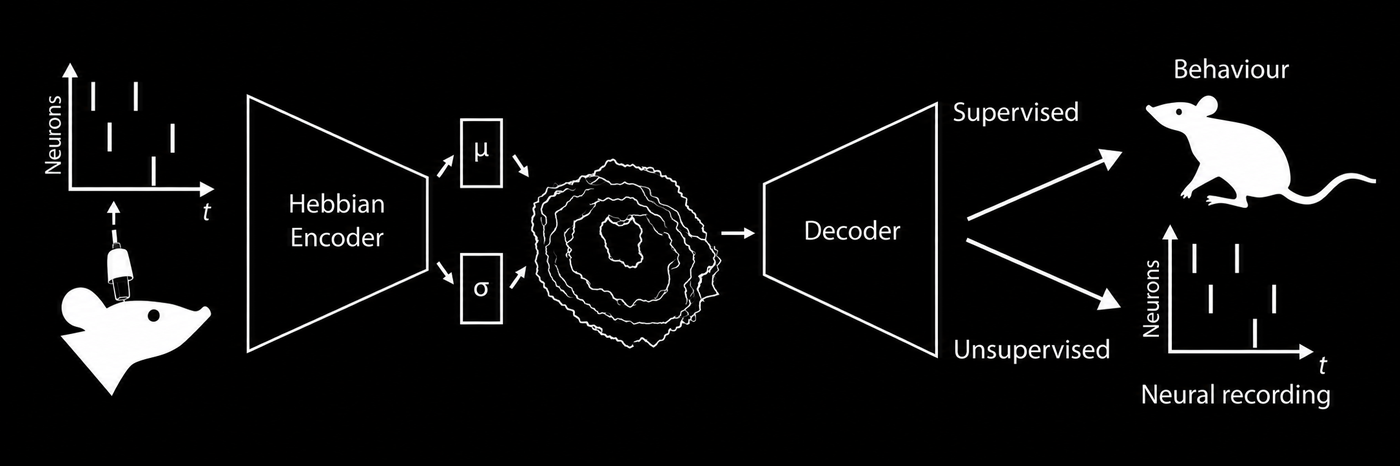
We develop NeuroAI frameworks, inspired by biological principles, to interpret large-scale neural datasets and uncover latent structure in population dynamics. Motivated by the goal of developing AI models inspired by neural connectivity and principles of network function, and drawing on recent advances in machine learning, we developed SPARKS (Sequential Predictive Autoencoder for the Representation of spiKing Signals), a biologically inspired deep-learning model that extracts spike timing information to generate robust latent representations of neuronal activity. Building on SPARKS, we aim to continue engineering biologically-inspired AI models that combine the efficiency and transparency of brain computation with the scalability of conventional platforms. The reciprocal exchange between neuroscience and AI not only advances our understanding of brain function but also yields scalable, interpretable tools for analysing neural activity and modelling cognitive processes.