The team

Senior Group Leader

Senior Laboratory Research Scientist

Postdoctoral Fellow

Postdoctoral Fellow

Postdoctoral Fellow

PhD Student

PhD Student

PhD Student
PhD Student

PhD Student — co-supervised by Assoc. Prof. Rui Ponte Costa, University of Oxford
PhD Student — co-supervised by Dr Ko Ho, The Chinese University of Hong Kong
PhD Student — co-supervised by Dr Dan Goodman & Dr Marcus Ghosh, Imperial College London
PhD Student — co-supervised by Dr Sadra Sadeh, Mr Martin Tisdall & Prof. Torsten Baldeweg
Master's Student

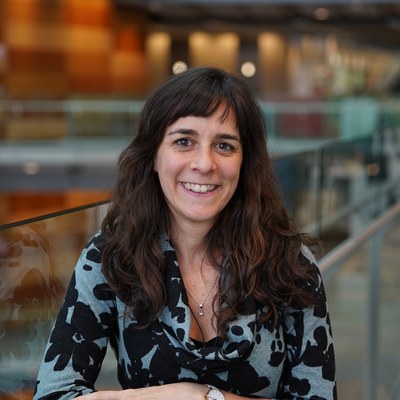
Flor grew up in Buenos Aires, Argentina. She obtained a degree in biological sciences at the University of Buenos Aires in 2009. In the laboratory of Lia Pietrasanta she studied the interaction of NGF receptors, by combining imaging techniques and molecular dynamics as an undergraduate fellow.
She did her doctoral research studying the circuit mechanisms underlying spatial frequency coding during natural visual scenes and the organisation of synaptic connections in the visual cortex with Angus Silver and Thomas Mrsic-Flogel at the department of Physiology, University College London (UCL), with the support of a UCL Graduate Research Scholarship.
For postdoctoral training she joined Sonja Hofer's lab in the Biozentrum, Switzerland, in 2014 to investigate the relationship between the function of neurons and their long-range connectivity. In 2016 she joined Andrew King's lab at Oxford University as a fellow from the Royal Commission for the Exhibition of 1851 to study how the brain switches attention between different sensory inputs.
In 2019 she started her lab at the Francis Crick Institute investigating the organization of the neuronal circuits responsible for integrating multisensory information and selecting behaviourally relevant targets.

Tim obtained his bachelor's degree in Biology with a Modern Language (French) at the University of Manchester, during which he spent 9 months working on adult neurogenesis at Université Paul Sabatier in Toulouse. He completed his doctoral studies at the University of Aberdeen investigating the role of retinoic acid in the regulation of neurogenesis in the adult hippocampus.
After his PhD, Tim worked for 6 years as a postdoc at the University of East Anglia studying stem cells in the adult hypothalamus, then joined Keele University to work on a European Horizon 2020 project developing novel cell transplantation strategies for Parkinson's Disease.
In 2020, Tim joined the Iacaruso lab where he focuses on the neural circuits underlying perception, sensory integration and cross-modal attention in the superior colliculus.

Marcelo earned his undergraduate degree in Biological Sciences from the University of Buenos Aires. He completed his undergraduate thesis in the lab of Prof. Elgoyhen, studying the evolution of cochlear receptor pharmacology, and went on to earn his Ph.D. under Dr. Goutman at INGEBI (Buenos Aires), investigating the segregation of opposing synaptic signals in the peripheral auditory system.
Marcelo joined the Iacaruso lab as a postdoctoral researcher, where he investigates the neural basis of sensorimotor transformations during pursuit behaviour. He developed an innovative virtual pursuit paradigm that enables the study of how the brain converts sensory information into motor actions while dynamically updating internal representations to guide behaviour.

Matthew obtained his PhD from King's College London, where he investigated brain-wide cortical activity during flexible decision making in Neurexin-1a knockout mice in the laboratory of Dr Adil Khan. He is currently studying how neural dynamics in motor planning regions are modulated to enable effective inhibitory control. His goal is to develop dynamical systems frameworks to better understand the circuit mechanisms of neuropsychiatric conditions.

Nicolas obtained his MEng in electrical engineering from CentraleSupélec, France in 2018 and Ph.D in neuromorphic computing for telecommunications from King's College London, UK in 2022.
He joined the Crick in 2023 to apply his modelling expertise to the data recorded by colleagues in the lab. His work lies at the intersection between neuroscience and AI, where he develops AI tools using inspiration from the brain's impressive capabilities to make sense of highly complex neuronal data. His interests span systems and theoretical neuroscience, dynamical systems, reinforcement learning and neuromorphic computing.

I'm a fourth-year PhD student in the Iacaruso Lab, working on the collicular circuits behind visually guided pursuit in mice. I perform chronic Neuropixels recording in the superior colliculus while mice freely chase a virtual prey in a task developed by my colleague Dr. Marcelo Moglie.
I use generalized additive models to characterise how individual neurons are tuned to the animal's behaviour, and I'm particularly interested in whether SC neurons encode predictive visual or motor signals — essentially, whether the circuit is anticipating where the prey is going rather than just tracking where it's been. My hope is that this work builds a clearer picture of how the SC supports pursuit behaviour more broadly.
Before this, I did my undergrad in Medical Bioscience at Imperial College London, where I worked in Prof. Di Giovanni's lab studying how macrophages regulate neuronal activity. I then moved into computational neuroscience for my Master's in Bioinformatics and Theoretical Systems Biology, working with Dr. Sadra Sadeh on modelling how short-term synaptic plasticity shapes cortical excitation-inhibition balance.
Outside the lab, I'm usually caving, hiking, or with my nose in a book — Dostoevsky is a permanent favourite.

I am a PhD student in the Iacaruso lab, and I study colliculothalamic communication and how this process guides action selection during goal-directed behaviour. I address this using a combination of freely moving behavioural tasks, electrophysiology and viral tracing methods.
I studied Neuroscience at the University of Manchester, where I worked with Professor Rasmus Petersen on the role of visuotactile integration in object exploration by mice. During my undergraduate, I also completed a year long placement in the lab studying behavioural flexibility and adaptation in mice to perturbations during a visual pursuit task.

Megan completed her undergraduate degree in physics at Oxford University in 2020, after which she discovered a passion for research while working as a research software engineer in a medical technology startup. She retrained in neuroscience by completing a Master's in neuroscience at UCL in 2022, and working as a Research Assistant at the Sainsbury Wellcome Centre, where she gained experience establishing complex behaviours in mice.
Megan joined the Iacaruso lab in 2024 to follow her long-term interest in neuropsychiatry, while placing a strong emphasis on developing a mechanistic understanding of cognitive and behavioural phenotypes in complex neuropsychiatric conditions using animal models. She is currently working on a mouse behaviour studying flexible attention and inhibitory control in a freely moving setting, and aims to combine modelling of behaviour and electrophysiological data to capture how computations underlying this behaviour unfold in concert.
Leslie attended Wesleyan University in Middletown, Connecticut where she graduated with a bachelor's degree in Neuroscience & Behavior. She earned a master's degree from University College London in Social Cognition and a master's degree in Applied Statistical Modelling & Health Informatics from King's College London.
She also worked as a staff research associate at the Center for Imaging of Neurodegenerative Diseases at the University of California, San Francisco, and was a post-baccalaureate research fellow at Yale University School of Medicine.

PhD Student — co-supervised by Assoc. Prof. Rui Ponte Costa, University of Oxford
Iris obtained her Bachelor of Medicine at the University of Lyon (France) and her Bachelor of Physics at ENS Paris (France). During the first year of a Neuroscience Master, she studied the role of Parvalbumin-expressing interneurons in experience-dependent plasticity under the guidance of Dr Zeiger at UCLA (California, USA).
In 2023 she joined the Doctoral Training Centre of the University of Oxford (UK), and in 2025 she started her Ph.D. work in co-supervision between the University of Oxford, supervised by Assoc. Prof. Ponte Costa, and the Francis Crick Institute, supervised by Dr. Iacaruso. Her project focuses on the neural and computational basis of serotonergic modulation across brain systems. To do so she (1) studies how serotonin modulates sensory processing in the mouse superior colliculus and (2) develops a theory posing serotonin as a meta-learning signal adaptively gating sensory input and internal systems according to task demands.

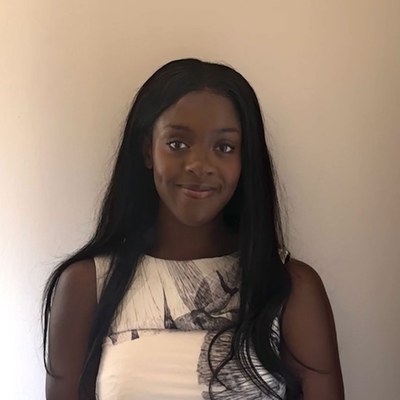
Before her PhD, Anna studied computer science (MEng) at the University of Southampton. Her PhD focusses on multisensory learning. She tackles computational questions — like what architectures and learning rules best suit multisensory learning? — and makes use of experimental data from mice.

PhD Student — co-supervised by Dr Sadra Sadeh, Mr Martin Tisdall & Prof. Torsten Baldeweg
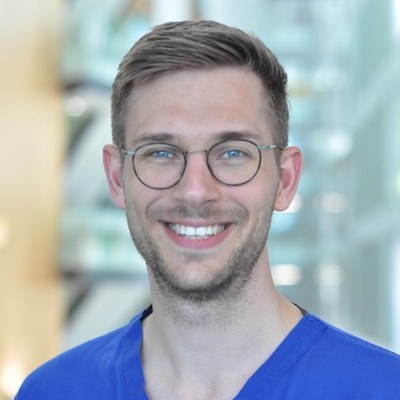
Olivier is from the Netherlands. He came to the UK to study medicine at Cambridge University in 2013, finishing his clinical studies at University College London in 2019.
He started neurosurgery training in the South-West in 2022. In 2025 he undertook a 6-month research fellowship at the University of Exeter and the Bristol Royal Hospital for Children, working on new methods to analyse scalp EEG recordings of children with drug-resistant epilepsy.
His PhD focuses on intracranial EEG data of children with drug-resistant epilepsy and will explore the characteristics and dynamics that precede the onset of seizures.

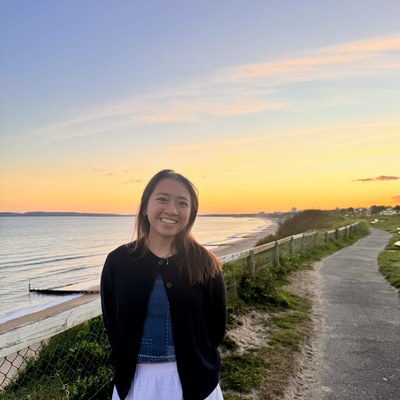
I am a Master's student in the Iacaruso lab, currently undertaking the MSc Neuroscience degree at UCL. I study the effects of dexamphetamine on inhibitory control through a head-fixed behavioural task designed by Dr Matthew Harvey, a postdoctoral researcher also in the Iacaruso lab.
Previously, I studied Pharmacy at King's College London and worked as a clinical pharmacist in an NHS Trust specialised in the treatment and support of those affected by mental health conditions. My experience in this clinical setting motivated me to return to university to understand and explore these conditions further, inspiring an interest in understanding how neuronal circuits underlie specific behaviours.